Latest News on Our Blog
Naira Stability at ₦1,360–₦1,370: What It Actually Means for Nigerian SMEs and Digital Entrepreneurs
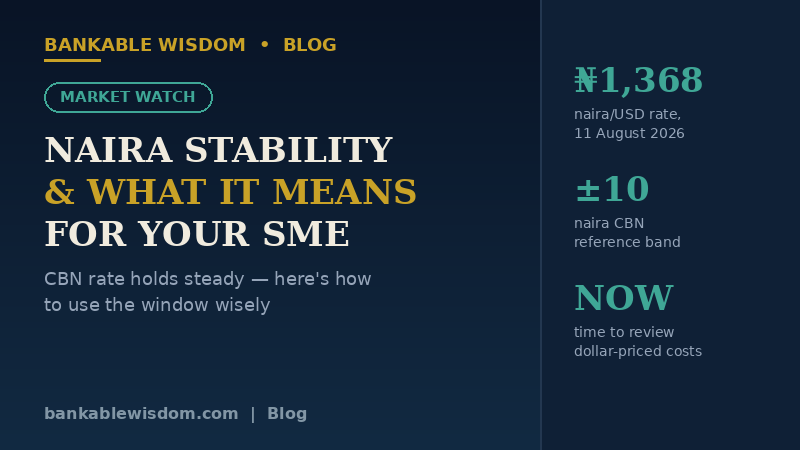
For the first time in a while, the naira is holding steady. As of 11 August 2026, it traded around ₦1,368 to the US dollar on the official Nigerian Foreign Exchange Market, with the Central Bank of Nigeria's reference rate sitting consistently within the ₦1,360 to ₦1,370 band. After years of sharp, unpredictable swings, that kind of stability is newsworthy on its own. But for SME owners, freelancers and digital entrepreneurs, the real question is not whether the rate is stable, it is what you should actually do with that stability while it lasts.
Exchange rate stability changes the maths for anyone running a business that touches foreign currency, even indirectly. If you import raw materials, software subscriptions, or equipment priced in dollars, a predictable rate means you can finally plan pricing months ahead instead of adjusting every few weeks just to stay solvent. If you are a freelancer or remote worker earning in dollars, a stable naira means the value of your income is more predictable when you convert it, which matters even more now that foreign-paid income falls under Nigeria's Tax Reform Acts and has to be declared properly.
For digital entrepreneurs specifically, currency stability tends to unlock a second-order effect that is easy to miss: investor and lender confidence. Stable currencies make it easier for angel investors, diaspora backers and even local banks to commit to longer repayment terms and predictable equity valuations, because they are not pricing in currency risk on top of business risk. If you have been holding off on a funding round, a business loan application, or renegotiating supplier contracts because the naira was too unpredictable to plan around, this window is worth acting on.
That said, stability is not the same as permanence. The CBN's reference rate holding within a ten-naira band for a stretch of days does not guarantee it holds for a stretch of months. Nigeria's currency history over the past decade has taught most SME owners not to build long-term plans entirely around a good week. The smarter move is to use a stable period to strengthen the fundamentals that protect you when volatility returns: build a cash buffer, lock in supplier contracts at current rates where you can, and if you price in both naira and dollars, review your dollar-denominated pricing now rather than waiting for the next shock to force your hand.
This is also a good moment to build financial literacy into how you run your business, not just react to the exchange rate when it moves. Understanding how CBN policy, oil production levels and external trade balances feed into what you pay for imported stock or software is not optional knowledge for a serious Nigerian entrepreneur in 2026, it is operational literacy.
At Bankable Wisdom, our SME training touches exactly this kind of financial and digital literacy, alongside the AI and digital skills training we are known for, because business survival in Nigeria right now depends on both. If you want to build a business that can plan properly regardless of which way the naira moves next, explore our SME courses at bankablewisdom.com