Over 20+ New Jobs Daily
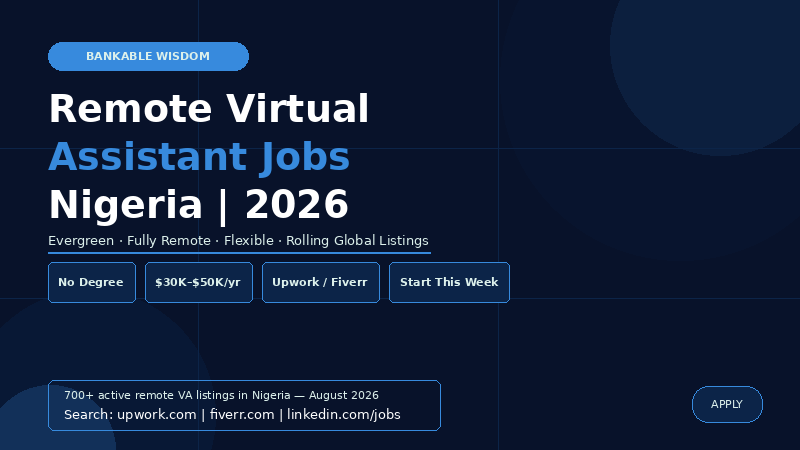
Job Title: Remote Virtual Assistant (Evergreen, 700+ Active Listings)
This is not a post about an opportunity that closed three months ago. As of August 2026, there are more than 700 verified remote job listings open to Nigerians across Glassdoor, LinkedIn, Indeed Nigeria, and Jobberman — and Virtual Assistant roles represent one of the largest and most accessible categories inside that pool.
Companies in the US, UK, Canada, and Europe are actively looking for skilled, English-speaking remote assistants right now. They do not care whether you are based in Lagos, Aba, or Kano. They care whether you are reliable, organised, communicative, and able to represent their business professionally without someone standing over your shoulder.
The VA role has also evolved. Today's remote VA is not just booking flights and managing calendars. They are running CRM systems, managing social media accounts, preparing reports, handling client communications, coordinating project deliverables, and operating as the operational backbone of businesses that have no interest in maintaining a physical office. The work is real. The pay is international. And the pathway in is shorter than most people think.
What a Remote VA Does Day to Day
Managing email inboxes — filtering, prioritising, drafting and sending responses on behalf of busy executives. Scheduling meetings and appointments using tools like Google Calendar, Calendly, and Microsoft Outlook. Conducting research — supplier comparisons, competitor analysis, travel logistics, market research. Managing social media accounts by scheduling posts and responding to basic engagement. Handling data entry, CRM updates, and spreadsheet organisation. Preparing documents, slide decks, and reports using Google Workspace and Canva. Handling customer queries and client communication on behalf of business owners.
What Remote VA Jobs Pay
Entry-level VA roles typically pay between $10 and $20 per hour, which translates to $1,500 to $3,000 per month on retainer contracts. Over a full year, that is $18,000 to $36,000 — significantly more than most equivalent office-based roles in Nigeria at current exchange rates. Experienced VAs who specialise in executive support, project management, or e-commerce platforms earn $40,000 to $60,000 annually. Payments arrive through Payoneer, Wise, or Deel — all fully accessible to Nigerians.
Skills You Need to Start Applying
Strong written English — professional, clear, and error-free in every message you send on behalf of a client. Google Workspace proficiency — Docs, Sheets, Gmail, Calendar, Drive. The ability to manage your own time and meet deadlines without being chased. Familiarity with at least one communication tool — Slack, Zoom, Loom, or Notion. A working laptop and a reliable internet connection with a backup data option.
You do not need all of these before you send your first application. Most clients understand they are bringing you into their system and will train you on their specific tools. What they cannot train is reliability and genuine willingness to make their work easier.
Where to Find Active Listings Right Now
Upwork (upwork.com) — build a strong profile, set competitive starting rates, and actively bid on relevant jobs daily. Fiverr (fiverr.com) — create specific gig packages around your skills and attract inbound clients. LinkedIn Jobs (linkedin.com/jobs) — search "virtual assistant remote worldwide" filtered to entry level. Indeed Nigeria (ng.indeed.com) — international remote VA roles posted regularly with global eligibility. Glassdoor Nigeria — 700+ active remote listings including VA and admin support roles confirmed August 2026. Jobberman (jobberman.com) — actively posting remote VA, executive assistant, and admin support roles.
Apply here: https://www.upwork.com
Bankable Wisdom Tip: Your first VA client does not come from a perfect profile. It comes from a very good first message. Read every job post for 10 minutes before you respond. Find the employer's actual problem — it is usually buried in the last paragraph of the listing — and lead your response with your specific solution to that problem. That one habit puts you ahead of 80% of every other person applying to the same role.